
Connect with us


.png)

Schedule a Consultation!
5 Foods That Support Healthy Testosterone — and What Diet Can't Do
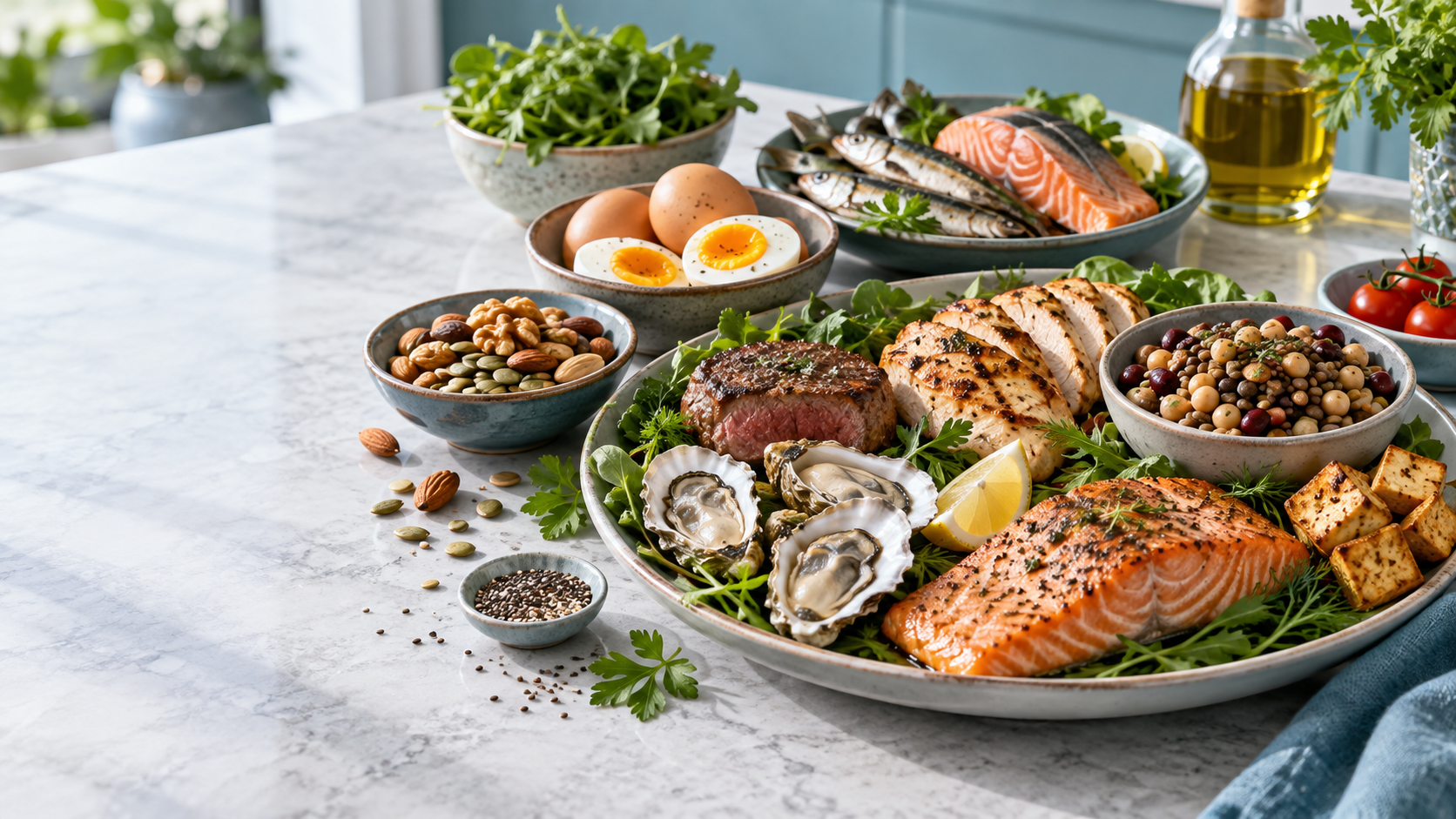
Nutrition without the hype
Build meals that support health. No egg, fish, nut or supplement can promise to fix low testosterone.
Medically reviewed by Timothy Mackey, D.O., Medical Director. Reviewed and approved: September 10, 2026.
Physician-led careIndividualized evaluation
★★★★★4.9 Google rating
A+ BBBAccredited business
Quick answer
Food supports nutrition; it does not replace a diagnosis
Eggs, fatty fish, lean protein, zinc-rich foods, and nuts or seeds can contribute to a balanced diet. These are practical food choices, not proven treatments for testosterone deficiency. Their value comes from helping meet nutritional needs—not from a guaranteed increase in a hormone result.
Five food choices worth putting on the menu
The categories overlap: a food can provide protein, fat and minerals at the same time. There is no need to eat every item every day. Choose foods that fit your preferences, allergies, budget and medical needs. USDA’s protein-food guide includes both animal and plant sources.
1. Eggs: an accessible protein option
Eggs offer protein and can make a simple meal alongside vegetables and whole grains. Think of them as one possible ingredient, not a daily prescription for testosterone. Eating extra cholesterol is not a reliable strategy for producing more hormone.
A practical meal
Try eggs with vegetables and whole-grain toast. If eggs do not suit your dietary needs, use another protein source rather than assuming you are missing an essential testosterone food.
2. Fatty fish: protein and useful fats
Salmon, sardines and trout provide protein; fatty fish are also dietary sources of vitamin D. Amounts vary with the fish and preparation. Vitamin D supports important body functions, but vitamin D is not converted into testosterone. NIH vitamin D fact sheet.
Build a meal around fish, vegetables and a grain or beans. Vary seafood choices and follow any individual advice about mercury, sodium or food allergies. Avoid turning a nutritious meal into a promise of improved libido or a higher lab value.
3. Lean protein: meet your needs consistently
Lean poultry or meat, beans, lentils and tofu can help supply protein across the day. Adequate protein supports tissue maintenance; resistance exercise provides a separate stimulus for strength and muscle. Neither a large steak nor a protein shake establishes that low testosterone has been treated.
Make the meal work for you
Choose a protein you enjoy and pair it with produce and a fiber-rich carbohydrate. The useful habit is a sustainable meal pattern—not forcing a particular food or consuming more protein than your needs require.
4. Zinc-rich foods: adequacy matters
Oysters, beef and other foods can contribute zinc; beans, nuts and seeds also provide it, although absorption differs. Zinc is needed for normal biological functions. Having enough is different from assuming that extra zinc improves testosterone in someone whose intake is already adequate. NIH zinc fact sheet.
If your diet is very restricted or a clinician suspects deficiency, ask whether testing or dietary assessment is appropriate. High-dose zinc supplements can cause problems, including copper deficiency. Do not combine several testosterone-booster products without reviewing the ingredients.
5. Nuts and seeds: useful additions
Nuts and seeds contribute plant protein, fats and other nutrients. Use them as an addition to meals or a snack that suits your energy needs. A measured portion can be more useful than eating straight from a large bag if weight management is a goal.
Try seeds over yogurt or oatmeal, or add nuts to a salad. Choose an alternative if you have an allergy. A seed’s nutrient content is not evidence that it increases free testosterone.
What Matters More Than Any Single Testosterone Food
Sustainable weight management
If excess weight is affecting health, work toward realistic changes that can be maintained. Crash diets are not a hormone treatment.
Enough calories and protein
Avoid chronic under-fueling. A restrictive plan that leaves you exhausted or unable to recover deserves reassessment.
Resistance training and activity
Build strength and fitness progressively. A short-lived hormone change after a workout is not the same as correcting deficiency.
Sleep and recovery
Make room for regular sleep. Persistent snoring, poor sleep or daytime sleepiness are reasons to discuss possible sleep problems.
Deficiencies and medicines
Address nutrient gaps when present and review medicines or medical conditions that could contribute to symptoms.
Appropriate testing
Symptoms and repeat morning measurements guide evaluation—not how carefully you follow a food list.
These habits work together. NIDDK’s guidance on eating and physical activity focuses on an eating pattern and activity plan that can be sustained. For the broader hormone-health discussion, continue to How to Raise Testosterone Naturally.
What diet cannot do
A meal plan cannot determine whether a low result reflects an illness, medication effect, testicular condition or pituitary problem. Nor can it establish whether TRT is appropriate. Improvements in weight, fitness or energy are valuable even if the testosterone number does not change.
If symptoms persist, get evaluated rather than trying increasingly restrictive diets or supplements. What Should My Testosterone Levels Be? explains what a lab result can—and cannot—tell you.
Frequently asked questions
Which food raises testosterone the most?
There is no established food ranking that predicts a meaningful testosterone increase. Choose a varied eating pattern rather than treating one ingredient as a hormone medication.
Can eggs treat low testosterone?
No. Eggs can supply useful nutrients, but eating them does not establish that a deficiency has been corrected or that symptoms are hormone-related.
Should I take zinc or vitamin D to boost testosterone?
A confirmed deficiency may need treatment, but supplements should not be used to chase a hormone number. More is not always better; excess zinc or vitamin D can be harmful.
Can a plant-based diet support hormonal health?
It can provide protein and many essential nutrients with planning. Beans, lentils, tofu, nuts and seeds offer alternatives; review potential nutrient gaps with a qualified clinician or dietitian.
When should I get tested instead of changing my diet?
Related: TRT & Low Testosterone Treatment in Jupiter, FL
Discuss persistent sexual symptoms, unexplained fatigue or other concerns with a physician. Healthy eating and medical evaluation can happen together; diet alone cannot diagnose low testosterone.
Questions about symptoms or testosterone testing?
Talk with a physician at NovaGenix in Jupiter about your symptoms, current medicines and any lab results. Nutrition can support a care plan, while testing helps clarify whether hormone deficiency is actually present. Patients may supply existing results; laboratory testing is billed separately from the TRT program.
NovaGenix · 609 N Hepburn Ave Ste 106, Jupiter, FL 33458
Schedule a consultationCall 561-277-8260Text NovaGenix
Educational information, not an individualized diet or hormone-treatment plan. Endocrine Society diagnostic guidance. Medically reviewed and approved September 10, 2026.
body:has(.ng-food-audit) .template-section{display:none!important}.content-section:has(.ng-food-audit){background-image:none!important}.content-section:has(.ng-food-audit) .containerdiv.content{display:block;max-width:1080px;margin:0 auto;padding:32px 24px}.content-section:has(.ng-food-audit) .div-left{width:100%;max-width:none}.content-section:has(.ng-food-audit) .div-right,.content-section:has(.ng-food-audit) .image-38{display:none}.div-left:has(.ng-food-audit)>h1{color:#09285a;font-size:clamp(32px,4vw,50px);line-height:1.15;text-transform:none}.div-left:has(.ng-food-audit)>img{width:100%;height:auto;max-height:none;object-fit:contain;border-radius:16px}.ng-food-audit a{color:#0066bd}.ng-food-audit p{color:inherit}.ng-food-audit h2{color:#09285a!important}.ng-food-audit section[style*="background:#063550"] h2{color:#fff!important}@media(max-width:767px){.content-section:has(.ng-food-audit) .containerdiv.content{padding:22px 16px}.ng-food-audit{font-size:17px!important}}
Questions about treatment options?
Speak with NovaGenix about physician-led evaluation, testing, and treatment options in Jupiter, Florida.
Medical disclaimer: This article is for general educational purposes only and is not medical advice, a diagnosis, or a treatment recommendation. Reading it does not create a physician-patient relationship. Always consult a qualified healthcare professional about your individual circumstances, and never delay seeking care because of something you read here. If you are experiencing a medical emergency, call 911. Read our full Medical Disclaimer.

Contact Us
Blood Work Request Form

609 N Hepburn avenue suite 106. Jupiter, Florida 33458

609 N Hepburn avenue suite 106. Jupiter, Florida 33458

561-277-8260

Schedule a Consultation
Learn what you want to know about hormone therapy by scheduling a free consultation.
Contact Us Today609 N Hepburn Ave Ste 106, Jupiter, FL 33458
Monday - Friday: 9:00 am - 5:00 pm | Saturday-Sunday: Closed